


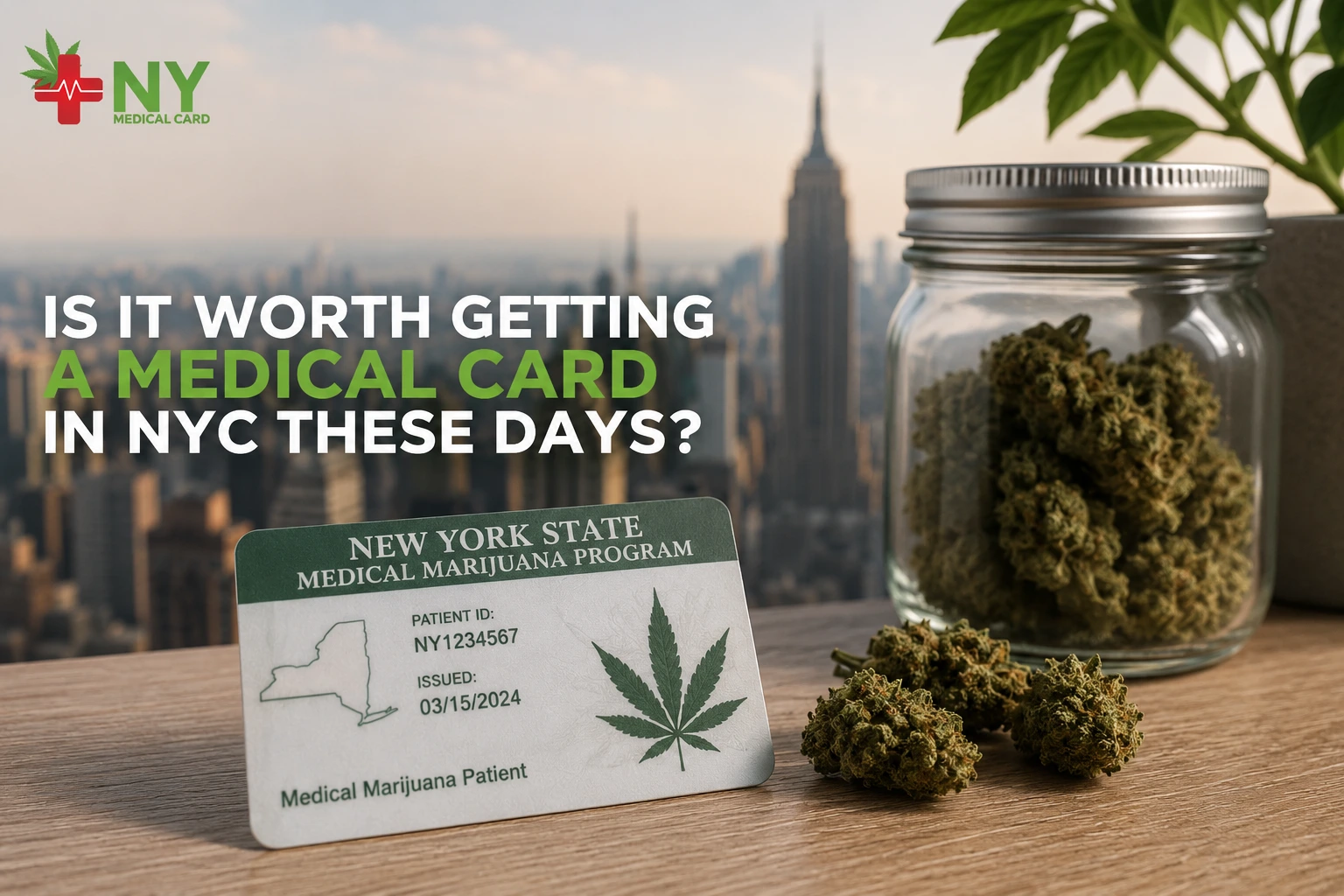
Weed is legal in New York. You can walk into almost any licensed shop, show your ID, and walk out with cannabis. So why do people still line up for a medical card in NYC? That’s the question this article answers, in plain language, with real numbers.
If you’re asking yourself, “Is it worth getting a medical card in NYC in 2025/2026?” you’re not alone. Thousands of New Yorkers ask this same thing every month. Some decide it’s a waste of time now that recreational shops are everywhere. Others swear by their medical marijuana card in NYC and say it pays for itself in a few months. Let’s break down the truth, without the fluff.
What Exactly Is a Medical Card in NYC?
A medical card from NYC is an official document that says a licensed doctor has reviewed your health and believes cannabis could help you. It’s issued through the New York State Medical Cannabis Program, run by the Office of Cannabis Management (OCM). Once you have your New York medical cannabis card in hand, you’re allowed to buy from medical dispensaries across the state, not just recreational ones.
This isn’t the same as walking into a regular weed shop with your driver’s license. A NY medical marijuana card comes with a doctor’s sign-off, a state registration, and a set of legal perks that a plain recreational purchase does not give you.
Recreational Weed Is Legal : So Why Bother With Medical?
This is the real question everyone in NYC is asking. New York legalized adult-use cannabis back in 2021, and dispensaries have opened up all over the five boroughs since. So why get a medical card in NYC when you can just walk in and buy legally at 21?
Here’s the short answer: because a medical marijuana card in NYC unlocks things recreational buyers simply don’t get. Lower cost, higher limits, legal protection, and access at a younger age. That’s the whole case for why you get a medical cannabis card if weed is legal in NY and it’s a stronger case than most people realize.
Medical vs. Recreational Cannabis NYC: The Real Differences
Let’s compare medical vs. recreational cannabis in NYC side by side, because this is where the real value shows up.
Taxes. Recreational cannabis in New York carries a combined tax that can run close to 13% on every purchase. A medical marijuana card in NYC cuts that down sharply, since medical purchases are taxed at a much lower rate under New York’s cannabis tax law. This is the single biggest reason people search for medical cannabis tax exemption New York, the savings show up on every single receipt, every single visit.
Possession limits. Recreational buyers are capped at roughly 3 ounces of flower or 24 grams of concentrate per purchase. A medical marijuana card in NYC raises that ceiling to a 60-day supply, set by your certifying doctor. If you use cannabis regularly for a health condition, this difference between medical and recreational cannabis New York differences matter a lot, fewer dispensary trips, more product per visit.
Age access. Recreational sales require you to be 21 or older, full stop. A medical cannabis card New York opens the door at 18, and in certain cases younger patients can qualify with a caregiver involved. This is exactly what people mean by medical cannabis access under 21 New York, it’s a real gap that only the medical program fills.
Home cultivation. Both programs allow home growing, but medical patients often get a bit more room under home grow medical vs. recreational New York rules, plus clearer guidance from their certifying doctor on what’s appropriate for their treatment.
Product access. Some dispensaries carry medical-only items, higher-potency tinctures, specific ratios, and formulations built for patients rather than casual users. A medical only products dispensary New York visit can look very different from a recreational one, with pharmacist-style guidance built into the experience.
Benefits of a Medical Cannabis Card in NY, One by One
Let’s go deeper into the benefits of medical cannabis card NY offers, because “cheaper and higher limits” doesn’t tell the whole story.
1. Real Tax Savings This is the headline benefit. Medical marijuana tax savings New York add up fast if you buy cannabis regularly. Someone spending $150 a month at a recreational shop is paying a noticeably higher tax bill than a medical card NYC holder buying the same products. Over a year, that gap can cover the entire cost of getting certified and then some.
2. Legal Protections, Medical Patients Get legal protections medical cannabis patients in NY enjoy go beyond the dispensary counter. Medical patients have documented protections around employment, housing, and even parental rights in some situations, because their cannabis use is tied to a medical need rather than a recreational choice. A recreational buyer doesn’t have this paper trail to lean on if a workplace or landlord ever questions their use.
3. Higher Possession, Limits As mentioned, higher possession limits medical cannabis NY patients receive mean fewer trips to the dispensary and the ability to stock up for weeks at a time. For patients managing chronic pain, anxiety, or other ongoing conditions, this convenience is a genuine quality-of-life improvement.
4. Access for Younger Patients Medical cannabis access under 21 New York is only possible through the medical program. If you’re 18, 19, or 20 and have a real medical need, recreational shops simply won’t sell to you. A doctor’s certification is the only legal path.
5. Caregiver Support Not everyone can visit a dispensary themselves. Caregiver medical cannabis New York rules let a designated person purchase and manage cannabis on behalf of a patient who is too sick, too young, or otherwise unable to go in person. Recreational law has no real equivalent to this.
6. Priority Access During Shortages When certain products run low across the state, medical patients often get priority. That’s a small but real perk tied to holding a medical cannabis card New York, especially for patients who depend on a specific product for symptom management.
How Much Does a Medical Card Save in NYC, Really?
Let’s talk numbers, because “it saves money” isn’t good enough on its own.
The cost of a medical marijuana card in NYC typically runs somewhere in the range of a doctor’s consultation fee plus a state registration cost, often well under $200 total for the certification and up to two years of validity, depending on the provider you choose. Compare that to the tax difference on regular purchases. If you spend even $100 a month on cannabis, the tax savings from a medical card in NYC alone can offset the certification cost within a few months.
So how much does a medical card save in NYC? For light users, the savings might be modest. For regular or daily users, the math tips heavily in favor of getting certified. The heavier your usage, the more a medical marijuana card in NYC pays for itself.
How to Get Medical Marijuana Certification in NYC
Getting certified is easier than most people expect. Here’s how the process is for how to get medical marijuana certification NYC usually works:
- Book a telehealth appointment: Most patients now use medical cannabis telehealth services in New York services, which let you complete the entire visit from your phone or laptop, no waiting room required.
- Talk to a licensed provider: You’ll discuss your health history and symptoms. New York now allows a wide range of conditions to qualify, so you don’t need a rare diagnosis to be approved.
- Get certified: If approved, the doctor issues your certification and registers you with the state.
- Register with OCM: You’ll complete your patient registration with the Office of Cannabis Management to receive your official card.
- Shop at any medical dispensary: Once registered, your medical marijuana card NYC is valid at medical dispensaries statewide.
The whole process, from booking to certification, often takes under an hour thanks to telehealth options built specifically for New York patients.
Cost and Renewal: What to Expect Long-Term
The cost of a medical marijuana card in New York isn’t a one-time thing, certifications need to be renewed periodically, usually every year or two depending on your provider and the state’s current rules. Medical marijuana card renewal in NY is generally simpler than the first visit, since your provider already has your history on file.
Budget for renewal the same way you’d budget for any recurring health expense. It’s a small, predictable cost compared to the ongoing tax savings a medical card NYC delivers every time you shop.
Is a Medical Marijuana Card Still Worth It in New York?
So, back to the big question: is a medical marijuana card still worth it in New York? Here’s the honest breakdown.
It’s worth it if:
- You buy cannabis regularly and want to keep more money in your pocket through medical cannabis tax exemption New York rules.
- You manage a health condition where cannabis genuinely helps, and you want the legal protections medical cannabis patients in NY offer.
- You’re between 18 and 20 and can’t legally buy recreationally.
- You want higher possession limits for medical cannabis NY lets you carry, so you’re not making constant dispensary runs.
- You want access to medical-only formulations and stronger guidance from dispensary staff.
It might not be worth it if:
- You buy cannabis rarely, maybe once every couple of months, purely for casual use.
- You’re not interested in doctor visits or renewal paperwork, even simple telehealth ones.
- The tax savings on your typical purchase amount wouldn’t cover the certification cost within a reasonable time.
For most consistent users, though, the answer is medical marijuana card worth it New York leans firmly toward yes. The tax break alone tends to justify it, and the added legal protection, higher limits, and younger-age access are real bonuses on top.
Final Thoughts
New York’s dual cannabis system means you technically have a choice: walk into any recreational shop with your ID, or go through a short telehealth visit and get a medical card in NYC that pays for itself in tax savings over time. For casual, occasional buyers, recreational access alone might be enough. But for anyone who buys often, manages a health condition, or wants stronger legal footing, a medical marijuana card in NYC remains one of the smartest, most cost-effective moves available in New York’s cannabis market today.
If you’re still on the fence, do the simple math: add up what you spend on cannabis in a typical month, compare the tax difference, and check it against the cost of getting certified for a medical marijuana card in NYC. For many regular buyers, the savings and added benefits make the decision easy. If you have questions or you’re ready to get started, contact us today to schedule your online evaluation with a licensed New York medical cannabis provider. Our team is here to guide you through the process and help you obtain your medical marijuana card quickly, securely, and with confidence.

