


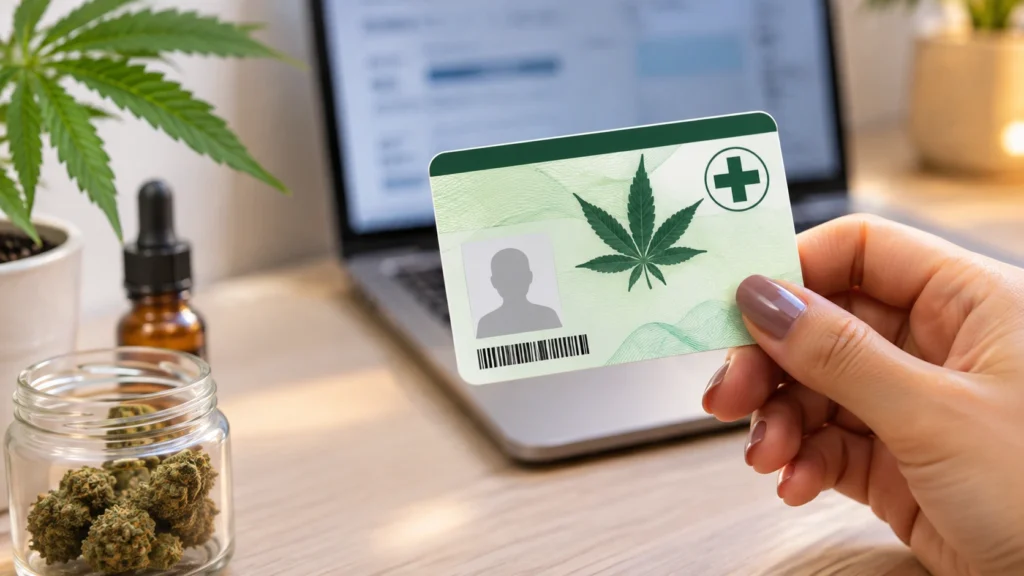
Quick Answer: You may be able to get a medical marijuana card without visiting a doctor’s office in person. Many states offer telehealth consultations that allow eligible patients to speak with an authorized medical marijuana doctor through a phone or video appointment. However, you may still need a medical evaluation and certification. The exact requirements depend on your state’s medical marijuana laws. If telehealth is allowed, you can complete the consultation from home and follow the remaining state application steps online.
Getting a medical marijuana card does not always mean traveling to a clinic, waiting for an appointment, or spending hours in a doctor’s office.
If you have a qualifying medical condition, you may be able to complete your medical evaluation from the comfort of your home. Many states allow online consultations through telehealth, making the application process easier for patients who cannot easily travel or prefer virtual appointments.
But how does it work? Can you really get a medical card without a doctor visit? What documents do you need, and how long does the process take?
The good news is that you may not need an in-person appointment. However, you must follow your state’s rules and complete any required medical evaluation.
This guide explains how to get a medical card without a doctor visit, what steps to follow, and what you should know before applying.
Ready to Get Your Medical Marijuana Card From Home?
You may not need to travel to a clinic to complete your medical evaluation. Check your state’s telehealth rules and find an authorized provider who can help you understand the application process.
Can You Get a Medical Card Without a Doctor Visit?
Yes, in some states, you can get a medical marijuana card without visiting a doctor’s office in person. This is possible through telehealth, which allows patients to speak with healthcare professionals using a phone or video call.
However, there is an important difference between avoiding an in-person visit and avoiding a medical evaluation.
Most state medical marijuana programs require an authorized healthcare professional to review your condition and provide certification before you can receive a card.
For example:
- Some states allow first-time patients to complete their evaluation through telehealth.
- Some states allow online consultations only for renewals.
- Other states require an in-person examination for both new and returning patients.
You should always check your state’s current requirements before booking an appointment.
How to Get a Medical Card Without a Doctor Visit: Step by Step
If your state allows online medical marijuana evaluations, you can follow these steps to get started.
Step 1: Check Your State’s Medical Marijuana Requirements
Before applying, find out whether your state allows telehealth consultations for medical marijuana certification. Every state has different rules about patient eligibility, medical evaluations, and registration.
Check these details first:
- Does your state allow online medical marijuana evaluations?
- Can first-time patients use telehealth?
- Do you need an in-person examination?
- What medical conditions qualify?
- Are there age and residency requirements?
For example, Hawaii allows initial medical cannabis certifications through telehealth under its guidance issued in September 2025. Florida, on the other hand, requires an in-person physical examination before an initial certification, although certain renewal examinations can take place through telehealth.
You can review the official guidance here:
- Hawaii Department of Health – Telehealth Certification Requirements
- Florida Medical Marijuana Program – Physician FAQs
Checking these rules first can save you time and prevent problems with your application.
Step 2: Check Whether You Have a Qualifying Medical Condition
The next step is to check whether your medical condition qualifies under your state’s medical marijuana program.
Common qualifying conditions in some states include:
- Chronic pain
- Cancer
- Epilepsy
- Glaucoma
- Multiple sclerosis
- Post-traumatic stress disorder (PTSD)
- HIV/AIDS
- Crohn’s disease
- Seizure disorders
- Certain neurological conditions
Not every state accepts the same medical conditions. Some have longer lists, while others have stricter eligibility rules. If you are unsure whether your condition qualifies, ask an authorized healthcare professional before submitting your application.
Step 3: Find an Authorized Medical Marijuana Doctor
Once you understand your state’s requirements, look for a healthcare professional who is approved to evaluate medical marijuana patients.
You can search through your state’s official medical marijuana program website or contact a licensed medical clinic.
Before choosing a provider, consider the following:
- Check the provider’s authorization: Make sure the healthcare professional is allowed to certify patients in your state.
- Ask about online appointments: Confirm whether first-time evaluations can be completed through phone or video consultations.
- Understand the charges: Ask about consultation fees, state registration fees, and any additional costs.
- Read the appointment details: Find out what information and medical documents you need before the evaluation.
Choosing an authorized provider helps you avoid websites that promise instant approval without a proper medical assessment.
Step 4: Register With Your State’s Medical Marijuana Program
Some states require patients to create an account in an official medical marijuana registry before or after their medical evaluation.
The registration process usually involves providing basic personal information, such as:
- Full legal name
- Date of birth
- Residential address
- Email address
- State-issued identification details
You may also need to upload proof of residency or enter information provided by your healthcare professional.
Follow your state’s instructions carefully. Some programs require registration before the consultation, while others allow patients to register after receiving their certification.
Step 5: Prepare Your Medical Documents
Before your online appointment, collect any documents that may help the healthcare professional understand your condition.
These may include:
- Medical records
- Previous diagnosis reports
- Test results
- Current medication details
- Previous treatment information
- State-issued identification
Not every provider requires all these documents. However, having relevant medical information available can make your consultation easier.
If you do not have medical records, contact the provider and ask what information you should bring.
Step 6: Attend Your Online Medical Evaluation
This is one of the most important steps.
If your state allows telehealth for your type of appointment, you can speak with the authorized healthcare professional from home.
During the consultation, the provider may ask about:
- Your medical condition
- How long you have experienced symptoms
- Your previous treatments
- Current medications
- Your medical history
- How your condition affects your daily life
Be honest when answering questions. The healthcare professional needs accurate information to decide whether medical marijuana certification is appropriate.
You can also ask questions about possible benefits, risks, side effects, and treatment options.
Remember, completing an online evaluation does not guarantee approval. The healthcare professional must determine whether you meet the state’s requirements.
Step 7: Receive Your Medical Marijuana Certification
If the healthcare professional determines that you qualify, they will provide or submit the required medical marijuana certification according to your state’s process.
Some states send certification details directly to the patient registry. Others require patients to upload documents or complete additional application steps.
Check your email and patient account for updates.
Keep in mind that medical certification and the final medical marijuana card are not always the same thing. You may need to complete registration and pay a state fee before receiving your card.
Step 8: Complete Your Application and Receive Your Card
After receiving your certification, follow the remaining instructions from your state’s medical marijuana program.
Depending on your state, you may need to:
- Log in to your patient account.
- Complete the required application.
- Upload identification documents.
- Pay the applicable state fee.
- Wait for your application to be processed.
- Receive your medical marijuana ID card or other proof of registration.
Once your registration is active, follow your state’s rules when visiting a licensed medical marijuana dispensary.
What Do You Need to Get a Medical Card Without Visiting a Doctor?
If your state allows online medical evaluations, preparing the right information can make the process easier.
Here is a simple checklist:
| Requirement | Purpose |
|---|---|
| Valid state ID | Confirms your identity |
| Proof of residency | Shows that you live in the state |
| Medical records | Helps explain your medical condition |
| Patient registration details | Supports your state application |
| Email address | Receives appointment and application updates |
| Phone or computer | Allows you to attend an online consultation |
| Internet connection | Helps you complete a video appointment |
Your exact requirements may vary depending on your state and the healthcare provider.
How Much Does It Cost to Get a Medical Card Without an In-Person Visit?
The cost depends on your state, healthcare provider, and application requirements.
Usually, there are two main expenses to consider.
1. Online Medical Evaluation Fee
This is the amount charged by the healthcare provider for reviewing your medical history and completing your consultation. Different clinics may charge different prices for first-time appointments and renewal evaluations.
2. State Registration or Medical Card Fee
Some states charge a separate fee to register patients or issue a medical marijuana ID card. Other states may have different registration requirements.
Before booking, ask the provider for a complete price breakdown. Make sure you understand whether the advertised price includes only the consultation or also covers state fees.
How Long Does It Take to Get a Medical Marijuana Card Online?
The time depends on how quickly you can schedule your consultation, complete your application, and receive approval from your state’s medical marijuana program.
Here is a general overview:
| Step | What Happens |
|---|---|
| State eligibility check | Confirm that you meet the requirements |
| Registration | Create your patient account if required |
| Online consultation | Speak with an authorized provider |
| Medical certification | Provider submits certification if approved |
| Application | Complete remaining state requirements |
| Card processing | Wait for your card or registration approval |
Some patients may complete certain steps quickly, but the full process is not guaranteed to finish on the same day. Preparing your documents and checking state requirements in advance can help prevent unnecessary delays.
Can You Get a Medical Card Without an In-Person Visit for Renewal?
In some states, yes.
Medical marijuana card renewal rules may be different from first-time application requirements. Some states allow existing patients to renew their certification through telehealth, even if they require an in-person examination for new patients.
For example, Florida allows qualifying physicians to conduct subsequent renewal examinations through telehealth after the required initial in-person physical examination.
Before your card expires, check your state’s renewal rules and schedule an appointment with an authorized provider.
Do not assume that the renewal process is the same in every state.
What Should You Check Before Booking an Online Medical Marijuana Consultation?
Choosing the right provider can make your experience easier.
Before scheduling an appointment, consider these important points:
- Provider authorization: Confirm that the healthcare professional is approved in your state.
- Telehealth availability: Check whether first-time patients can complete an online consultation.
- Clear pricing: Understand the consultation fee and any additional charges.
- Appointment process: Find out whether the consultation takes place by phone or video.
- Patient support: Choose a provider that can answer questions about registration and certification.
- Privacy: Check how your personal and medical information is handled.
Avoid services that promise a medical card without checking your eligibility or completing the evaluation required by your state.
Frequently Asked Questions
1. Can I get a medical card without visiting a doctor’s office?
Yes, in states that allow telehealth medical marijuana evaluations. You may be able to complete your consultation through a phone or video appointment instead of traveling to a clinic.
2. Can I get a medical marijuana card online without seeing a doctor?
Most states require an evaluation by an authorized healthcare professional. You may be able to complete this evaluation online, but simply filling out an application is generally not enough.
3. Is an online medical marijuana evaluation legal?
Yes, where state law permits telehealth certification. Some states allow first-time online evaluations, while others require an in-person examination.
4. Can I get a medical card without medical records?
It depends on your state and healthcare provider. Previous medical records can help support your evaluation, but ask the provider which documents are required.
5. Do I need a qualifying medical condition?
Yes, most medical marijuana programs require patients to have a condition recognized under state law. The approved conditions vary by state.
6. Can I get a medical card without an appointment?
If your state requires medical certification, you generally need to complete an evaluation with an authorized healthcare professional. An online form alone usually cannot replace this requirement.
7. Can I get my medical marijuana card on the same day?
Some parts of the process may be completed quickly, but receiving your final card depends on certification, state registration, payment, and processing times. Same-day approval is not guaranteed.
8. Can I renew my medical marijuana card online?
Some states allow online renewal consultations through telehealth. However, renewal requirements differ, so check your state’s current rules before booking.
9. Is an online medical marijuana card consultation private?
Medical consultations involve personal health information and must follow applicable privacy laws. Before booking, review the provider’s privacy policy and ask how your information is protected.
10. What happens if my state does not allow online medical marijuana evaluations?
You will need to follow your state’s in-person evaluation requirements. Contact an authorized medical marijuana provider to find an appointment and understand what documents you need.
Final Thoughts
Getting a medical card without a doctor visit may be possible if your state allows online medical marijuana evaluations.
You may not need to travel to a clinic, wait for an in-person appointment, or rearrange your daily schedule. Through telehealth, eligible patients can speak with an authorized healthcare professional from home.
However, remember that skipping an in-person visit does not always mean skipping the medical evaluation. You still need to meet your state’s eligibility requirements and complete the required certification process.
Start by checking your state’s rules, preparing your medical information, and choosing an authorized provider. Taking these steps can make the application process easier and help you avoid unnecessary delays.
Ready to get started? Check your eligibility and find out whether you can complete your medical marijuana evaluation online.
Sources
For accurate information about medical marijuana certification and telehealth requirements, refer to these official resources: