


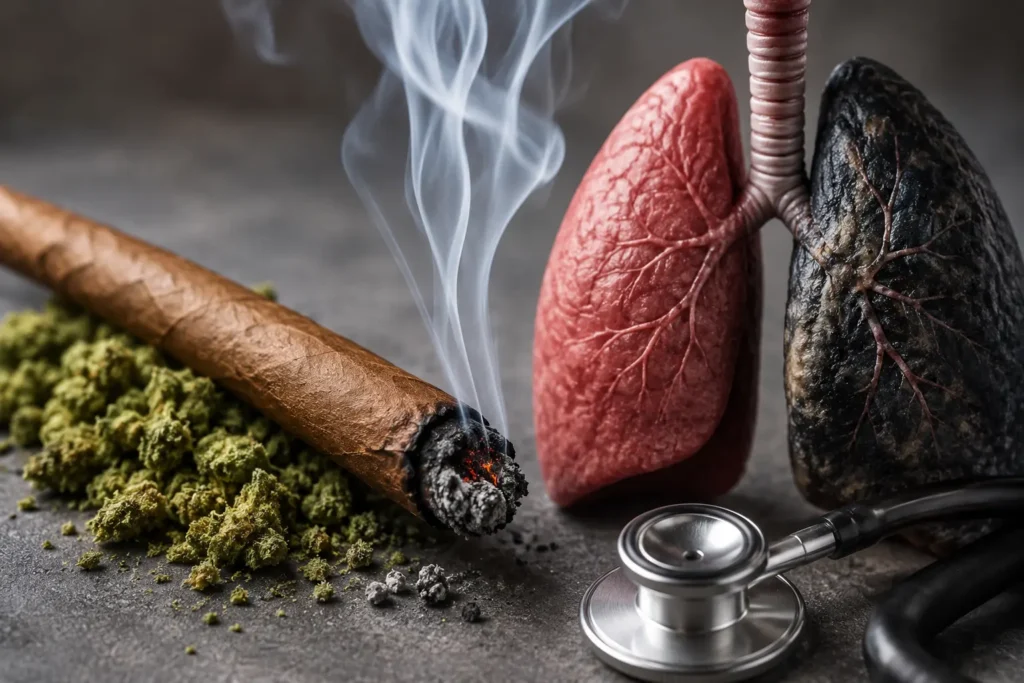
Smoking a blunt may seem similar to smoking cannabis in a joint, but there is an important difference: traditional blunts use tobacco-based wraps. That means you may be exposed to cannabis smoke and tobacco smoke during the same session.
This combination can introduce nicotine, carbon monoxide, tar, and other potentially harmful chemicals into your body. Cannabis smoke itself also contains many of the same toxins and irritants found in tobacco smoke.
If you smoke blunts regularly, understanding these risks can help you make more informed decisions about cannabis consumption and your health.
Considering Medical Cannabis?
Get professional guidance on medical marijuana, eligibility, and safer ways to use cannabis based on your individual needs.
What Is a Blunt?
A blunt is cannabis rolled inside a cigar, cigarillo, or tobacco leaf wrap rather than ordinary rolling paper. Depending on the product, the wrap itself can contain tobacco and nicotine.
That distinction is important because removing the loose tobacco from a cigar does not necessarily remove tobacco exposure. If the remaining wrap is made from tobacco, burning and inhaling it can still expose you to nicotine and tobacco-related chemicals.
Some people also use the word “blunt” to describe cannabis rolled in a tobacco-free wrap. Those products have a different risk profile because they do not contain tobacco, although smoking any plant material still creates combustion byproducts.
Are Blunts Bad for You?
Yes. Smoking blunts carries health risks, particularly when the wrap contains tobacco.
There are two main sources of exposure:
- Cannabis smoke
- Smoke from the tobacco-based wrap
The Centers for Disease Control and Prevention (CDC) says smoked cannabis can harm lung tissue and that cannabis smoke contains many of the same toxins, irritants, and carcinogens found in tobacco smoke.
When tobacco is also burned, you add exposure to nicotine and other chemicals associated with tobacco-related disease.
The level of risk depends on factors such as how often you smoke, how much you smoke, whether tobacco is present, and your individual health.
7 Health Risks of Smoking Blunts
1. Nicotine Exposure and Dependence
One of the biggest differences between a traditional blunt and a cannabis-only joint is the tobacco wrap.
Tobacco contains nicotine, a highly addictive substance. Repeated exposure can lead to dependence, meaning a person may develop cravings or find it difficult to stop using nicotine.
You can therefore be exposed to nicotine even if you do not think of yourself as a tobacco smoker.
This is particularly relevant for people who smoke blunts frequently.
2. Lung Irritation and Respiratory Symptoms
Burning cannabis produces smoke that can irritate the respiratory system.
Regular cannabis smoking has been associated with respiratory symptoms such as:
- Chronic cough
- Increased mucus production
- Wheezing
- Symptoms of bronchitis
The CDC reports that smoking cannabis can damage lung tissue and is associated with bronchitis, coughing, and increased mucus production.
The American Lung Association also notes that marijuana smoke can injure the lining of the large airways and contribute to respiratory symptoms.
3. Exposure to Toxic Chemicals
Smoke from combustion contains more than the substance you intend to consume.
Cannabis smoke contains many of the same toxins, irritants, and cancer-causing chemicals found in tobacco smoke. Tobacco smoke also contains toxic compounds associated with serious diseases, including cancer and cardiovascular disease.
Because a blunt combines cannabis with a tobacco-based wrapper, you may be exposed to harmful compounds from both sources.
4. Carbon Monoxide Exposure
Combustion produces carbon monoxide (CO), a gas that can interfere with the body’s ability to transport oxygen.
Smoking cannabis produces carbon monoxide exposure, just as burning tobacco does. This is one reason smoke inhalation can place additional stress on the cardiovascular and respiratory systems.
The amount of exposure varies based on how a person smokes, how much material is burned, and how frequently they smoke.
5. Cardiovascular Effects
Smoking exposes the cardiovascular system to substances that can affect the heart and blood vessels.
Cannabis can temporarily increase heart rate after use, while tobacco smoke contains chemicals associated with cardiovascular disease. The combination is therefore not considered harmless.
People with existing heart or cardiovascular conditions should discuss cannabis use with a healthcare professional, particularly if smoking causes noticeable symptoms such as chest discomfort, rapid heartbeat, dizziness, or shortness of breath.
6. Potential Long-Term Lung Concerns
Researchers continue to study the long-term effects of cannabis smoking.
There is established evidence that cannabis smoke can damage lung tissue and cause respiratory symptoms, but the relationship between cannabis smoking and lung cancer remains less certain than the well-established relationship between tobacco smoking and cancer.
That distinction is important.
It would be inaccurate to say that smoking cannabis has exactly the same long-term cancer risk as cigarette smoking. At the same time, the absence of definitive evidence for a particular cancer outcome does not make smoke inhalation safe.
7. Secondhand Smoke Exposure
The risks are not limited to the person holding the blunt.
Secondhand cannabis smoke contains many of the same toxic and cancer-causing chemicals found in tobacco smoke. It can also contain THC. If people are smoking blunts inside a home, car, or another enclosed area, others nearby may be exposed to the smoke.
Children, pregnant people, older adults, and individuals with respiratory conditions can be particularly important considerations when deciding where cannabis is consumed.
Are Tobacco Blunts More Risky Than Cannabis-Only Joints?
They can be, because a traditional blunt adds tobacco exposure to cannabis smoking.
A cannabis-only joint still involves combustion and therefore still produces smoke and potentially harmful compounds. However, a tobacco-based blunt introduces another source of nicotine and tobacco-related toxins.
So the comparison is not simply:
- Blunt = cannabis
- Joint = safe
A more accurate way to think about it is:
- Traditional blunt: cannabis + tobacco wrap + combustion
- Cannabis joint: cannabis + rolling paper + combustion
Neither method is risk-free, but avoiding a tobacco wrap eliminates the nicotine and tobacco-specific exposure associated with the wrap.
Are Blunts Addictive?
They can contribute to nicotine dependence when tobacco-based wraps are used. Nicotine is highly addictive, and repeated tobacco exposure can lead to dependence.
Cannabis use can also become problematic for some people. The CDC notes that some people who use cannabis develop cannabis use disorder, which can involve difficulty controlling use despite negative consequences.
This means a person who regularly smokes blunts may be dealing with exposure to both nicotine and THC, depending on the products and patterns of use.
Does Holding Blunt Smoke in Your Lungs Make It Stronger?
Holding smoke in your lungs for longer does not make smoking safer.
Longer breath-holding increases the time your respiratory tissues are exposed to smoke. It also does not eliminate the harmful substances produced through combustion.
There is no health benefit to deliberately keeping smoke in your lungs for an extended period. If you experience coughing, chest discomfort, wheezing, or shortness of breath while smoking, that is a reason to stop and consider speaking with a healthcare professional.
Are Tobacco-Free Blunt Wraps Safer?
A tobacco-free wrap can remove tobacco and nicotine exposure, which is an important difference.
However, “tobacco-free” does not mean “risk-free.”
If the wrap and cannabis are burned, you are still inhaling smoke and combustion products. The CDC states that smoked cannabis can harm lung tissue regardless of whether it is smoked in a joint, blunt, bowl, or bong.
So switching from a tobacco wrap to a tobacco-free wrap may remove one source of exposure, but it does not eliminate the risks associated with inhaling smoke.
What About Smoking Blunts Occasionally?
Occasional use generally means less cumulative exposure than frequent or daily smoking, but less exposure does not mean no exposure.
Every smoking session can expose the lungs to combustion products. If a tobacco wrap is used, there is also nicotine exposure.
Your overall risk can depend on:
- How often you smoke
- How much cannabis you use
- Whether the wrap contains tobacco
- How deeply you inhale
- How long you have been smoking
- Whether you also smoke cigarettes or use other tobacco products
- Your existing lung and heart health
Someone who smokes once a month does not have the same exposure pattern as someone who smokes several blunts every day.
What Are Lower-Smoke or Non-Smoked Cannabis Options?
If your main concern is reducing exposure to smoke, changing the method of consumption can eliminate or reduce combustion-related exposure.
Depending on your circumstances and local laws, options may include:
1. Edibles
Edibles deliver cannabis through the digestive system instead of the lungs. However, their effects can take longer to appear and may last much longer than inhaled cannabis.
Because of that delayed onset, taking more before the first dose has fully taken effect can increase the chance of consuming too much.
2. Tinctures or Oral Products
Some cannabis products are designed for oral or sublingual use rather than smoking. Their effects can differ from inhaled cannabis, so following product directions and discussing medical cannabis use with a healthcare professional is appropriate.
3. Dry-Herb Vaporization
Vaporization heats cannabis rather than burning it. This can reduce exposure to some combustion products compared with smoking, but it does not make inhalation risk-free.
The long-term health effects of cannabis vaporization are still being studied. For medical cannabis patients, the best method depends on the individual’s condition, medications, goals, and medical history.
How Can You Reduce the Risks If You Currently Smoke Blunts?
If you are not ready to stop using cannabis, there are practical steps that may reduce certain exposures.
1. Avoid tobacco-based wraps
Choosing a tobacco-free option eliminates nicotine from the wrap itself.
2. Avoid mixing cannabis with tobacco
Combining cannabis with tobacco increases exposure to nicotine and tobacco smoke.
3. Avoid smoking indoors
This can reduce secondhand smoke exposure for other people in the household. Cannabis smoke can contain THC as well as toxic and cancer-causing chemicals.
4. Consider non-smoking methods
If lung health is your primary concern, a non-inhaled method avoids smoke exposure altogether.
5. Talk to a healthcare professional
If you use cannabis for a medical condition, a clinician can help you consider whether your method of administration makes sense for your health needs.
When Should You Talk to a Doctor?
Smoking-related symptoms should not automatically be dismissed as a normal part of cannabis use.
Consider medical advice if you experience:
- Persistent cough
- Wheezing
- Shortness of breath
- Chest pain or pressure
- Coughing up blood
- Repeated respiratory infections
- Symptoms that are becoming more frequent or severe
Seek urgent medical attention for severe breathing difficulty, significant chest pain, coughing up substantial amounts of blood, fainting, or other potentially serious symptoms.
Frequently Asked Questions
Are blunts worse for your lungs than joints?
Traditional blunts add tobacco exposure because the wrap is often made from tobacco. Both blunts and joints involve smoke inhalation, so neither should be considered harmless. The CDC states that smoked cannabis can damage lung tissue regardless of how it is smoked.
Do blunt wraps contain nicotine?
Traditional cigar and cigarillo wraps can contain tobacco and therefore nicotine. Nicotine is highly addictive.
Can smoking blunts cause lung problems?
Yes. Cannabis smoke can irritate and damage lung tissue and has been associated with coughing, mucus production, and bronchitis symptoms.
Are tobacco-free blunts safer?
A tobacco-free wrap removes the tobacco and nicotine exposure associated with a traditional tobacco wrap. However, if cannabis is still burned and inhaled, smoke-related risks remain.
Are blunts addictive?
Traditional blunts can expose you to nicotine, which can lead to dependence. Cannabis use can also become problematic for some people and may develop into cannabis use disorder.
Is smoking one blunt occasionally dangerous?
Occasional use generally results in less cumulative exposure than frequent smoking, but a single smoking session still involves inhaling combustion products. If tobacco is present in the wrap, there is also nicotine exposure.
Is cannabis smoke safer than cigarette smoke?
It is not accurate to describe cannabis smoke as harmless. Cannabis smoke contains many of the same toxins, irritants, and carcinogens found in tobacco smoke. However, the long-term health risks of cannabis smoking are not identical to those of cigarette smoking, and researchers are still studying several outcomes.
Does smoking a blunt affect people nearby?
Yes. Secondhand cannabis smoke contains toxic and cancer-causing chemicals and can contain THC. Smoking around other people, particularly in enclosed spaces, can expose them to these substances.
Final Thoughts
The health risks of smoking blunts come from more than cannabis alone. When a tobacco-based wrap is used, you are combining cannabis smoke with exposure to nicotine and tobacco-related chemicals.
Smoking cannabis can also harm lung tissue and contribute to respiratory symptoms.
If you want to reduce your exposure, avoiding tobacco-based wraps and considering non-smoked cannabis options can remove some of the risks associated with tobacco or combustion. However, no cannabis consumption method should automatically be considered risk-free.
If you use cannabis for medical purposes or have an existing heart or lung condition, discuss your options with a qualified healthcare professional before changing your treatment or consumption method.
Sources
- Centers for Disease Control and Prevention (CDC) — Cannabis and Lung Health
CDC — Cannabis and Lung Health - Centers for Disease Control and Prevention (CDC) — Cannabis Frequently Asked Questions
CDC — Cannabis FAQs - Centers for Disease Control and Prevention (CDC) — Cigars and Tobacco Health Risks
CDC — Cigars and Smoking - Centers for Disease Control and Prevention (CDC) — Secondhand Cannabis Smoke
CDC — Cannabis and Secondhand Smoke - National Institute on Drug Abuse (NIDA) — Marijuana Research Report
NIDA — Marijuana Research Report - American Lung Association — Marijuana and Lung Health
American Lung Association — Marijuana and Lung Health