


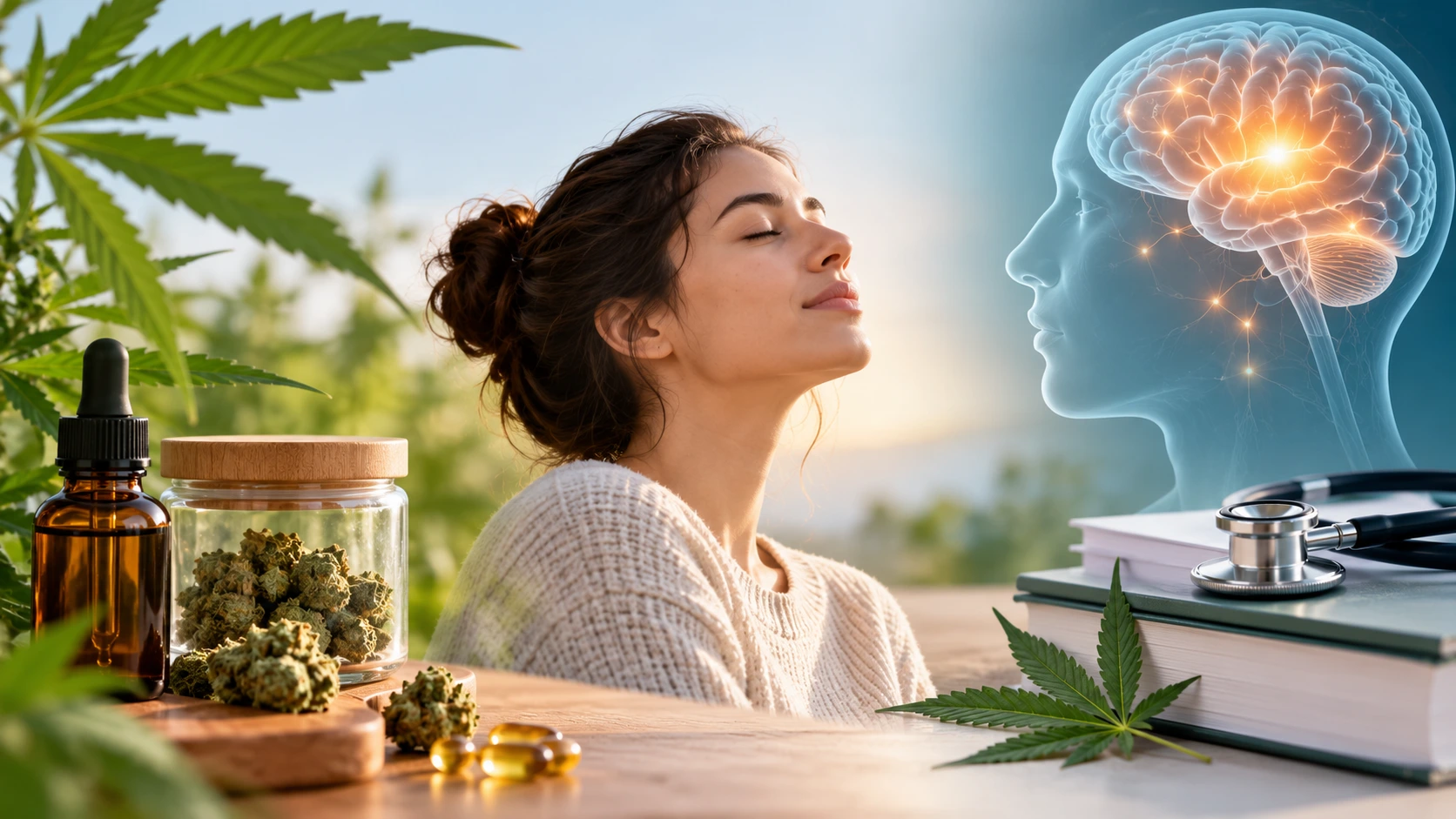
Medical marijuana is often discussed as a possible way to manage mental health symptoms, including anxiety, stress, sleep problems, and symptoms related to post-traumatic stress disorder (PTSD). But does it really help, and is it safe for everyone?
Medical Marijuana for Mental Health is a topic that deserves a closer look. Some people report feeling calmer or sleeping better after using cannabis, while others experience increased anxiety, panic, or other unwanted effects. Research is still developing, and the results depend on the condition being treated, the cannabis product, and the person using it.
If you are thinking about medical marijuana for a mental health concern, this guide explains what current research tells us, the possible benefits, the risks to consider, and the questions to ask a healthcare professional before making a decision.
Considering Medical Marijuana for Mental Health?
Before trying cannabis for anxiety, PTSD, sleep problems, or another mental health concern, speak with a qualified healthcare professional. They can help you understand the available evidence, review your medical history and medications, and discuss options that may be safer or better supported for your needs.
>>Contact Us<<
What Is Medical Marijuana for Mental Health?
Medical marijuana refers to cannabis used for a health-related purpose under a healthcare professional’s guidance, where permitted by law.
Cannabis contains natural compounds called cannabinoids. Two of the best-known are:
-
THC (tetrahydrocannabinol): The compound mainly responsible for the feeling of being high. It can affect mood, memory, attention, and how a person experiences their surroundings.
-
CBD (cannabidiol): A compound that does not usually produce the same intoxicating effects as THC. It is being studied for several possible health uses, but evidence for treating mental health conditions remains limited.
The body has a system called the endocannabinoid system, which helps regulate functions such as mood, sleep, stress responses, and memory. Cannabinoids can affect this system, but that does not automatically mean cannabis is an effective or safe treatment for mental health conditions.
Medical marijuana is not one single product. Different products contain different amounts of THC and CBD, so their effects and risks can vary.
Can Medical Marijuana Help With Mental Health Conditions?
The answer depends on the condition, the product used, and the person’s health history. Some people report short-term relief from certain symptoms, but that does not prove cannabis treats the underlying mental health condition.
Here is what to know about some of the most common reasons people consider medical cannabis:
1. Anxiety and Stress
Anxiety can cause constant worry, a racing heart, trouble sleeping, and difficulty relaxing. Some people use cannabis because they feel calmer after taking it.
However, THC can either reduce or increase anxiety, depending on factors such as the dose and the person’s sensitivity. Higher amounts may trigger panic, fear, confusion, or uncomfortable thoughts.
CBD is also being studied for anxiety. Some small studies suggest it may help with certain anxiety symptoms in specific situations, but researchers still need stronger evidence to understand its long-term effects and the best way to use it.
What this means: Medical marijuana is not a proven first-choice treatment for anxiety disorders. Established treatments, including cognitive behavioral therapy (CBT) and certain prescription medicines, have stronger evidence behind them.
2. Post-Traumatic Stress Disorder (PTSD)
PTSD can develop after a frightening or traumatic experience. It may cause nightmares, unwanted memories, fear, poor sleep, and a constant feeling of being on guard.
Some people with PTSD report that cannabis helps them sleep or feel less distressed. However, personal experiences do not tell us whether cannabis provides lasting improvement or treats the condition itself.
Research has not established medical cannabis as an effective treatment for PTSD. Some studies are small, and results are not consistent enough to draw firm conclusions.
What this means: People with PTSD should discuss cannabis use with a qualified healthcare professional rather than replacing established care with it. Trauma-focused therapy and certain prescription medicines are commonly used to treat PTSD.
3. Depression and Low Mood
Depression is more than feeling sad for a day or two. It can affect sleep, appetite, energy, concentration, relationships, and interest in everyday activities.
Some people say cannabis temporarily improves their mood. However, short-term changes in how someone feels do not necessarily mean their depression is improving.
Research has not shown reliable benefits from cannabinoids for treating depression. Cannabis use is also associated with depression and other mental health problems, although an association alone does not prove that cannabis directly causes them.
What this means: Do not rely on cannabis as a replacement for depression treatment. Speak with a healthcare professional if low mood continues, affects daily life, or becomes difficult to manage.
4. Sleep Problems and Insomnia
Anxiety and other mental health concerns can make it difficult to fall asleep or stay asleep. Some people use cannabis because they feel sleepy after taking it.
Certain cannabinoid studies have found possible improvements in sleep-related symptoms. However, much of the research has limitations, and it remains unclear whether cannabis offers lasting benefits for people with insomnia.
Regular use can also lead to dependence in some people. When they stop, sleep difficulties may return or become worse for a while.
What this means: If sleep problems continue, discuss their possible cause with a healthcare professional. Improving sleep habits and treating an underlying condition may provide more lasting relief.
5. Bipolar Disorder and Psychosis
Bipolar disorder involves episodes of depression and unusually elevated or irritable mood. Psychosis can affect a person’s ability to tell what is real, sometimes causing hallucinations or strong beliefs that are not based on reality.
THC can trigger paranoia or other psychotic symptoms, particularly in susceptible people. Cannabis use is also linked with a higher risk of psychosis, especially with frequent use, high-THC products, and use that begins at a young age.
People with bipolar disorder, a history of psychosis, or a strong family history of psychotic illness should discuss these risks with a healthcare professional before considering cannabis.
What this means: Cannabis should not be treated as a substitute for established care for bipolar disorder or psychosis. These conditions need proper medical assessment and treatment.
What Are the Possible Benefits of Medical Marijuana for Mental Health?
The potential benefits are often discussed in relation to symptom relief rather than a cure for a mental health condition.
Possible effects that researchers are investigating include:
-
Short-term anxiety relief: Some people report feeling calmer, although THC can also make anxiety worse.
-
Changes in sleep: Certain cannabis products may affect sleep or help some people fall asleep, but lasting benefits are uncertain.
-
Changes in stress responses: Cannabinoids interact with systems involved in stress and mood regulation, but the clinical importance of this effect is still being studied.
-
Relief from symptoms linked to another health problem: If pain or another physical condition contributes to distress or poor sleep, treating that condition may help a person’s overall well-being. This does not establish cannabis as a treatment for a mental health disorder.
It is important to separate feeling better for a short time from getting better over the long term. A product that briefly changes mood or helps someone fall asleep may not improve the condition causing those symptoms.
What Are the Risks of Medical Marijuana for Mental Health?
Cannabis can affect people differently. Its effects depend on the THC and CBD content, the amount used, how often it is taken, and a person’s health history.
1. Increased anxiety or panic
THC may cause a racing heart, fear, uneasiness, or panic, particularly when the amount is too high.
2. Paranoia or psychotic symptoms
Some people experience severe suspiciousness, confusion, hallucinations, or difficulty distinguishing what is real.
3. Problems with memory and concentration
Cannabis can affect attention, learning, reaction time, and decision-making. These effects can interfere with work, school, and everyday activities.
4. Dependence and withdrawal
Some people develop a pattern of use that is difficult to control. Reducing or stopping regular use can lead to irritability, sleep problems, anxiety, and cravings.
5. Interactions with medicines
CBD and THC may interact with prescription medicines or other substances. A healthcare professional or pharmacist can help check for potential interactions.
These risks are supported by public health guidance and clinical reviews. The risk is not the same for everyone, but it should not be ignored simply because a product is marketed as medical cannabis.
What Does the Latest Research Say About Medical Marijuana for Mental Health?
Research into medical cannabis and mental health continues, but the findings are mixed.
A systematic review published in 2026 examined clinical trials of cannabinoids for mental health and substance-use disorders. It found no clear benefit for several conditions, including anxiety disorders, PTSD, bipolar disorder, ADHD, and psychotic disorders. Some findings suggested possible benefits for particular symptoms, but the quality of the evidence was often very low.
A separate review published in 2025 reported that some studies found improvements in anxiety symptoms. However, many studies had important limitations, including inconsistent reporting of product types and doses. Researchers could not establish whether these improvements would last or lead to better long-term health.
The U.S. Food and Drug Administration (FDA) has not approved cannabis as a treatment for mental health disorders. It has approved specific cannabinoid medicines for certain other conditions, but those approvals do not establish cannabis as a treatment for anxiety, depression, or PTSD.
What Are the Main Research Gaps?
Researchers still need better answers to several important questions:
-
Which specific cannabinoids, if any, help particular mental health symptoms?
-
What amounts and formulations are safe and effective?
-
How do the effects differ between THC, CBD, and products containing both?
-
Can any short-term improvements last for months or years?
-
Which people face a higher risk of worsening symptoms or developing dependence?
-
How does cannabis interact with antidepressants, anti-anxiety medicines, and other treatments?
Until these questions are answered more clearly, claims that medical marijuana reliably treats mental health conditions should be viewed with caution.
Who Should Be Careful Before Using Medical Marijuana?
Medical marijuana may carry greater risks for some people. Talk with a healthcare professional before using cannabis if you:
-
Have a history of panic attacks, psychosis, bipolar disorder, or severe anxiety.
-
Have experienced paranoia or hallucinations after using cannabis.
-
Take prescription medicines for depression, anxiety, sleep, or another health condition.
-
Are pregnant, planning a pregnancy, or breastfeeding.
-
Are under 25, because the brain continues developing into young adulthood.
-
Have difficulty controlling cannabis use or have experienced withdrawal symptoms.
Do not stop prescribed mental health medication or change your treatment plan without speaking with your prescriber. Cannabis may not be a suitable option for you, even if someone you know reports good results.
How to Make an Informed Decision About Medical Marijuana
If you are considering medical marijuana for mental health, take these steps before making a decision.
-
Identify the problem you want to address: Is it anxiety, sleep difficulty, PTSD symptoms, or something else? Understanding the problem helps your healthcare professional discuss appropriate treatments.
-
Review your current treatment: Tell your healthcare professional about your medicines, supplements, previous cannabis use, and any unwanted reactions you have experienced.
-
Ask about the evidence: Find out whether cannabis has been studied for your specific condition and how it compares with established treatment options.
-
Understand the product: If cannabis is being considered where legally permitted, ask about THC and CBD content, possible side effects, product quality, and interactions with your medicines.
-
Know when to seek help: If symptoms worsen, stop using the product and seek medical advice. Severe confusion, hallucinations, or an immediate risk of harm require urgent medical attention.
Remember that legal access to medical cannabis does not automatically mean it is an effective or appropriate treatment for your condition.
Frequently Asked Questions
1. Is medical marijuana good for mental health?
Not necessarily. Some people report temporary relief from certain symptoms, but research has not established cannabis as a reliable treatment for most mental health conditions. It can also worsen anxiety, paranoia, or other symptoms.
2. Can medical marijuana help with anxiety?
Some studies suggest that cannabinoids may help with certain anxiety symptoms, but the evidence is inconsistent. THC can also trigger anxiety or panic, especially in higher amounts. Established treatments such as therapy and prescribed medication have stronger evidence for anxiety disorders.
3. Is CBD better than THC for mental health?
CBD does not usually cause the intoxicating effects associated with THC, but that does not mean it is automatically safe or effective for mental health. CBD research is still developing, and products sold online may differ in quality, strength, and ingredients.
4. Can medical marijuana make depression worse?
It can be a concern. Cannabis use is associated with depression, and frequent use may be linked with worse mental health outcomes in some people. The relationship is complex, and research has not established that cannabis directly causes every case of depression. Anyone experiencing persistent low mood should seek professional guidance.
5. Is medical marijuana FDA-approved for anxiety or PTSD?
No. The FDA has not approved cannabis as a treatment for anxiety disorders, PTSD, or depression. Certain prescription medicines containing cannabinoids have been approved for specific other medical conditions, but those approvals do not extend to mental health treatment.
6. Can I use medical marijuana along with antidepressants?
Do not assume the combination is safe. Cannabis and CBD may interact with certain medicines or increase unwanted effects. Speak with your prescriber or pharmacist before combining them, and do not stop your prescribed medication on your own.
7. What is the safest way to treat a mental health condition?
The right approach depends on your symptoms, medical history, and personal needs. Evidence-based options may include psychotherapy, prescribed medication, healthy sleep habits, and other forms of professional support. A healthcare professional can help you decide which options are appropriate.
Conclusion
Medical Marijuana for Mental Health remains an area of active research. Some people report short-term relief from anxiety or sleep problems, but current evidence does not establish cannabis as a reliable treatment for anxiety disorders, depression, PTSD, or other major mental health conditions.
The potential risks also matter. Cannabis can increase anxiety, affect memory and concentration, interact with medication, and cause more serious symptoms in people who are vulnerable to psychosis.
The best next step is to speak with a qualified healthcare professional who can review your symptoms, explain the available evidence, and help you weigh the benefits and risks. If you are already receiving mental health treatment, discuss any interest in cannabis with your current provider before making changes.
You deserve care that helps you feel better while protecting your long-term health.

