


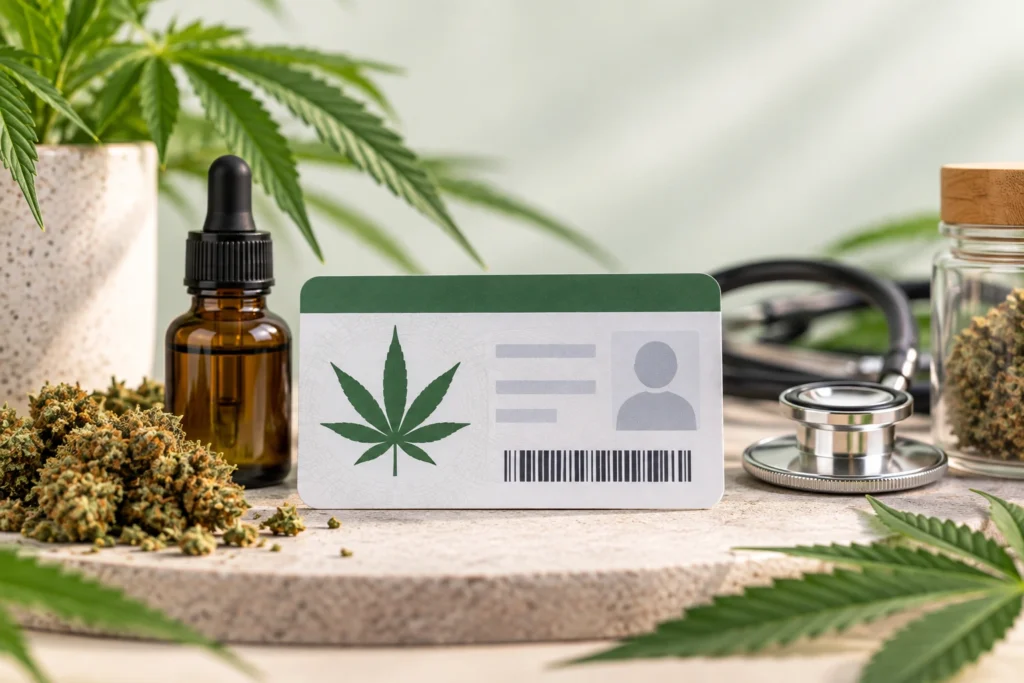
Quick Answer: The purpose of a medical marijuana card is to show that a patient has been approved to use medical cannabis under their state’s medical marijuana program. Depending on the state, a medical marijuana card may allow a qualified patient to purchase cannabis from licensed dispensaries, possess certain amounts, and sometimes grow cannabis at home.
However, a medical marijuana card does not mean you can use cannabis anywhere or at any time. It generally does not allow you to drive while impaired, use cannabis in places where consumption is prohibited, or ignore possession and purchase limits. The exact rules and benefits vary by state.
Many people hear about medical marijuana cards but are not sure what they actually do.
Some people think a medical marijuana card is simply a document that lets them buy cannabis. Others wonder whether it provides tax benefits, protects them at work, allows home growing, or gives them permission to carry cannabis in public.
The answer is that a medical marijuana card can provide several benefits, but those benefits depend heavily on the state where you live.
State medical cannabis programs have their own rules for qualifying conditions, patient registration, possession limits, dispensary purchases, cultivation, and other requirements. Because these laws can change, it is important to check your state’s current rules before relying on a medical marijuana card.
Looking Into a Medical Marijuana Card?
If you’re considering a medical marijuana card, start by checking your state’s eligibility requirements and medical cannabis rules. Understanding the process, costs, and patient benefits can help you decide whether a medical cannabis program is right for you.
>>Contact Us<<
What Is a Medical Marijuana Card?
A medical marijuana card, sometimes called a medical cannabis card or patient registration card, is issued through a state medical cannabis program.
It identifies a person as a registered or authorized medical cannabis patient. Depending on the state’s system, the patient may receive a physical card, digital identification, or another form of official authorization.
The card itself is not a general permission slip to use cannabis however you want. Instead, it is connected to the state’s medical cannabis rules.
For example, a state may require a patient to:
- Have a qualifying medical condition.
- Receive an evaluation or certification from an authorized healthcare professional.
- Register with the state’s medical cannabis program.
- Pay a state registration fee, if required.
- Follow possession, purchase, and use restrictions.
The specific process is different from one state to another.
What Is the Purpose of a Medical Marijuana Card?
The main purpose of a medical marijuana card is to establish that a person is authorized to participate in a state’s medical cannabis program.
Here are some of the most common reasons people obtain one.
1. It May Allow You to Buy Medical Cannabis
One of the most common purposes of a medical marijuana card is to give registered patients access to licensed medical cannabis dispensaries.
In states with medical marijuana programs, patients may need to show proof of their registration before purchasing products through the medical system.
Depending on the state, the program may provide access to products that are not available through the adult-use market. This can include different product types, purchase limits, or product strengths, although these rules vary by state.
2. It May Allow Legal Possession Under State Law
A medical marijuana card can also establish that you are authorized to possess cannabis for medical purposes under applicable state law. The amount you can possess is not unlimited.
States can establish specific possession limits for registered patients. Some programs may use weight limits, purchase limits, supply limits, or other restrictions.
This is why having a card does not mean you can carry any amount of cannabis you want. If you are a medical cannabis patient, learn your state’s possession rules and keep your registration current.
3. It May Provide Access to Medical-Only Products
Another possible benefit is access to products or purchase options reserved for medical cannabis patients. The exact products available depend on state regulations and individual dispensaries.
In some states, medical patients may have access to different purchasing limits or products than adult-use customers. This is one reason some people continue using a medical program even after recreational cannabis becomes legal in their state.
4. It May Reduce Cannabis Costs
A medical marijuana card may also help some patients save money. Depending on state and local rules, registered medical patients may receive lower cannabis taxes, discounts, or other pricing advantages.
For example, some people in online discussions report keeping their medical cards because they pay less tax or receive other dispensary benefits.
However, these savings are not guaranteed everywhere. Before getting or renewing a card, compare the cost of the card and registration with the actual benefits available in your state.
5. It May Allow Home Cultivation in Some States
Home growing is another area where medical marijuana cards can matter. Some states allow registered medical cannabis patients to grow a limited number of plants for personal medical use.
Other states do not allow medical patients to grow cannabis at home.
Even when home cultivation is allowed, there may be strict rules about:
- Number of plants
- Where plants can be grown
- Who can grow them
- Security requirements
- Whether plants must be kept out of public view
- Whether cannabis can be transferred to another person
Therefore, never assume that having a medical marijuana card automatically gives you permission to grow cannabis.
Check your state’s current cultivation rules first.
6. It May Provide Certain Patient Protections
Some states provide specific legal protections to registered medical cannabis patients. These protections can relate to possession, employment, or other areas of state law.
However, employment protections are particularly complicated.
According to the National Conference of State Legislatures, some states have laws addressing employment protections for medical cannabis patients, while many states leave cannabis-related workplace policies largely to employers.
So, a medical marijuana card should not automatically be treated as protection against every workplace drug-testing or employment issue.
7. It Can Help Establish Your Medical Cannabis Status
A medical marijuana card can also provide proof that you are participating in your state’s medical cannabis program.
This can be important when purchasing cannabis through a medical dispensary or when you need to demonstrate your patient status under applicable state rules.
Still, carrying a card does not replace the need to follow other cannabis laws.
What Does a Medical Marijuana Card NOT Allow You to Do?
Understanding the limits of a medical marijuana card is just as important as understanding its benefits.
A card generally does not give you permission to ignore other laws.
1. You Cannot Drive While Impaired
A medical marijuana card does not make impaired driving legal. If cannabis affects your ability to safely operate a vehicle, having a medical card does not give you permission to drive.
Always follow your state’s impaired-driving laws.
2. You Cannot Automatically Smoke in Public
Having a medical marijuana card does not usually mean you can consume cannabis wherever you want. Public consumption may be prohibited even when cannabis is legal for medical or adult use.
A medical card does not automatically turn a public location into a legal place for cannabis consumption.
3. You Cannot Ignore Possession Limits
Your card does not give you unlimited possession rights. Medical cannabis programs generally have specific rules governing how much cannabis a registered patient can purchase or possess.
Exceeding those limits can create legal problems.
4. You Cannot Assume You Can Grow at Home
Home cultivation depends on state law.
Some medical programs allow it, while others do not. Even states that permit cultivation can place limits on the number of plants and growing conditions.
5. You Cannot Assume Your Card Works Everywhere
A medical marijuana card is generally connected to the laws of the state that issued it. Some states recognize medical cannabis cards from other states under certain circumstances, while others do not.
If you travel, check the destination state’s rules before carrying or purchasing cannabis.
Why Do People Get a Medical Marijuana Card?
People have different reasons for joining a medical cannabis program.
Common reasons include:
- Access to medical cannabis through licensed dispensaries
- Legal authorization under a state’s medical cannabis program
- Potential tax savings
- Access to medical-only products or purchase limits
- Possible home cultivation rights
- Certain state-level legal protections
- Continued access to the medical cannabis system after recreational legalization
The value of a medical marijuana card depends on your personal circumstances and your state’s laws.
For someone living in a state where recreational cannabis is legal, for example, the card may still provide financial or product-related advantages.
For someone living in a state with only a medical cannabis program, the card may be necessary to legally participate in that program.
Medical Marijuana Card vs. Recreational Cannabis
A common question is whether someone still needs a medical marijuana card when recreational cannabis is legal.
There is no single answer.
A state may offer both medical and adult-use cannabis programs, but the two systems can have different rules.
| Medical Cannabis | Adult-Use Cannabis |
|---|---|
| Usually requires patient registration or authorization | Usually based on adult-use eligibility |
| Intended for qualifying medical patients | Intended for adult consumers |
| May have medical-specific products or limits | May have different purchase rules |
| May offer tax or pricing advantages in some states | Taxes may be higher depending on the state |
| May allow home cultivation under certain laws | Home cultivation rules vary |
| May provide certain state-level patient protections | Generally does not provide medical-patient status |
The differences are state-specific, so always check current local rules.
How Does a Medical Marijuana Card Work?
The process generally follows several steps.
Step 1: Check Your State’s Medical Cannabis Program
Start by finding out whether your state has a medical cannabis program and whether you qualify.
State rules can cover qualifying conditions, age requirements, residency, documentation, and other criteria.
Step 2: Complete a Medical Evaluation
If your state requires healthcare-professional certification, you may need an evaluation with an authorized physician or other qualified provider.
The provider determines whether you meet the state’s requirements.
Step 3: Apply or Register
After receiving the required certification, you may need to submit an application to the state’s medical cannabis program.
The application process and fees vary.
Step 4: Receive Your Patient Identification
If your application is approved, you may receive a medical marijuana card or another form of patient authorization.
Keep your registration information current.
Step 5: Purchase Cannabis According to State Rules
Once registered, you can use your authorization according to your state’s medical cannabis laws.
This may include purchasing cannabis from licensed dispensaries and following the state’s possession and purchase limits.
Does a Medical Marijuana Card Mean Cannabis Is Legal Everywhere?
No.
This is one of the most important things to understand about medical marijuana cards.
Cannabis laws differ between states and jurisdictions. A state medical marijuana card does not mean cannabis can be used in every location or under every circumstance.
The National Conference of State Legislatures maintains a state cannabis policy database because medical and adult-use cannabis laws differ across jurisdictions and continue to change.
There can also be differences between state and federal law. Federal cannabis policy has been undergoing regulatory changes, including proceedings related to marijuana’s classification under the Controlled Substances Act.
For this reason, patients should not assume that state authorization answers every federal legal question.
Can You Carry Cannabis in Your Car With a Medical Card?
This depends on state law.
A medical marijuana card may authorize possession under certain circumstances, but transportation rules can still apply. A card does not give you permission to use cannabis while driving or operate a vehicle while impaired.
If your state has specific rules for transporting cannabis, follow them carefully. Some jurisdictions may also have requirements involving packaging, storage, or where cannabis can be kept inside a vehicle.
Can You Use Medical Marijuana at Work?
Not necessarily.
Having a medical marijuana card does not automatically mean you can consume cannabis at work or use it during working hours.
Workplace policies and state employment laws can be very different.
Some states provide certain protections for registered medical cannabis patients, while others give employers more freedom to enforce drug policies.
If your job involves drug testing, driving, operating machinery, healthcare, public safety, or other safety-sensitive responsibilities, review the applicable rules carefully.
What Should You Know Before Getting a Medical Marijuana Card?
Before applying, ask yourself a few practical questions:
Does my state have a medical cannabis program?
Check the current state rules rather than relying on information from another state.
Do I meet the qualifying requirements?
Medical cannabis programs can have specific eligibility rules.
What benefits does the card provide?
Look at dispensary access, taxes, purchase limits, cultivation rules, and other benefits.
How much does the card cost?
Consider application, registration, evaluation, and renewal costs.
How often does it need to be renewed?
Card and registration periods differ by state.
Will my state recognize another state’s card?
Do not assume that your card automatically works when traveling.
What are the restrictions?
Understand possession, transportation, consumption, cultivation, and workplace rules before using cannabis.
Frequently Asked Questions
What is the main purpose of a medical marijuana card?
The main purpose is to identify a person as an authorized medical cannabis patient under a state’s medical marijuana program. Depending on the state, it may allow the patient to purchase and possess medical cannabis and receive other program-specific benefits.
Does a medical marijuana card let you buy weed?
In states with medical cannabis programs, an active patient registration or card may allow qualifying patients to purchase cannabis from licensed medical dispensaries. The exact purchasing rules depend on the state.
Does a medical marijuana card make it legal to smoke anywhere?
No. A medical marijuana card does not generally allow cannabis consumption in places where it is prohibited. Public-use restrictions can still apply.
Can you drive with a medical marijuana card?
You may be allowed to transport cannabis under applicable state rules, but a medical marijuana card does not make impaired driving legal.
Can a medical marijuana card save you money?
It can in some states. Medical patients may receive lower taxes, discounts, or other financial benefits, but the savings vary by location.
Does a medical marijuana card allow home growing?
Sometimes. Certain states allow registered medical cannabis patients to grow a limited number of plants, while others do not. Always check your state’s current cultivation rules.
Is a medical marijuana card valid in every state?
No. State medical cannabis laws vary, and reciprocity rules differ. Check the laws of the state you plan to visit before traveling with cannabis or relying on your card.
Final Thoughts
The purpose of a medical marijuana card is to give qualifying patients recognized status within a state’s medical cannabis program.
Depending on where you live, that status may provide access to medical dispensaries, specific cannabis products, different purchase limits, possible tax advantages, home cultivation rights, or certain legal protections. But a medical marijuana card does not remove all cannabis restrictions. It does not automatically permit public consumption, impaired driving, unlimited possession, or cannabis use anywhere you choose.
The most important point is simple: your medical marijuana card gives you rights under your state’s medical cannabis program, not unlimited permission to use cannabis.
Because cannabis laws can change, check your state’s current regulations before purchasing, possessing, growing, transporting, or consuming medical cannabis.