


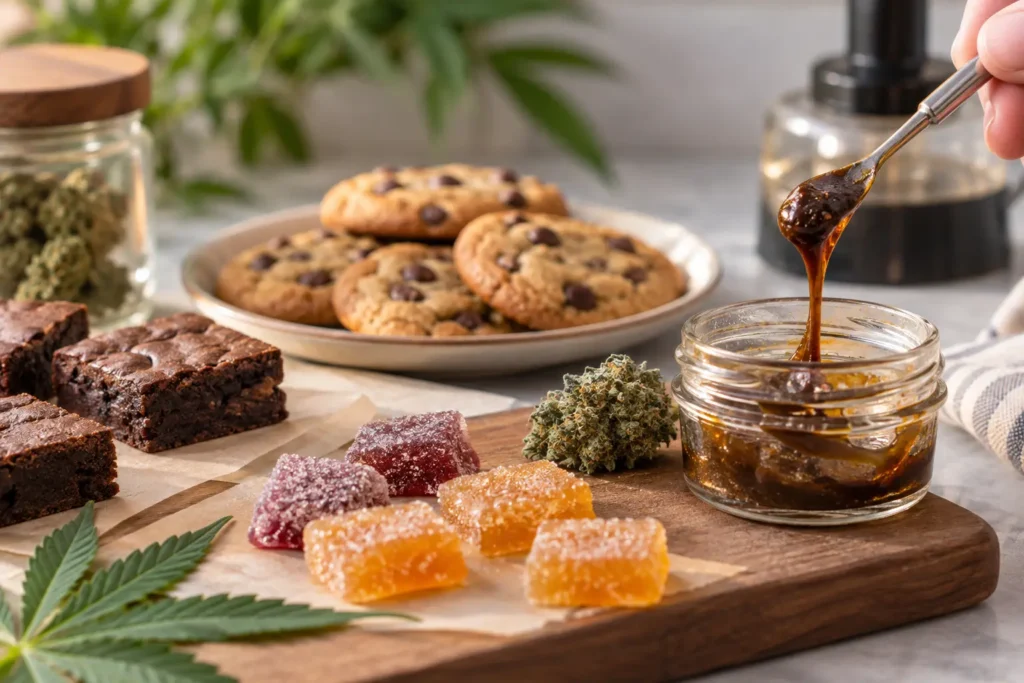
Quick Answer: Reclaim is the sticky cannabis residue left behind after concentrates are heated and vaporized. Because it has already been exposed to high heat, it may contain active cannabinoids and does not necessarily need the same preparation used for fresh cannabis flower. However, reclaim potency and purity can vary widely, so homemade reclaim edibles are difficult to dose accurately. If you choose to use reclaim, only use material from a known, legally obtained source, avoid guessing its THC strength, and take extra care with storage and delayed edible effects.
If you use cannabis concentrates, you may have noticed a dark, sticky substance building up inside your dab rig. That material is commonly called reclaim.
Instead of throwing it away, some cannabis consumers wonder whether reclaim can be used in food. The short answer is yes, reclamation can contain cannabinoids that remain after vaporizing cannabis concentrate. But that does not mean every batch of reclaim is equally potent, clean, or suitable for eating.
The biggest challenge is uncertainty. Unlike a regulated edible with a laboratory-tested THC amount, homemade reclaim can have an unknown cannabinoid concentration. The original concentrate, temperature, equipment, storage conditions, and contamination can all affect what ends up in the residue.
If you’re researching how to make reclaim edibles, this guide explains what reclaim is, why it can work in an edible, what to consider before using it, and how to approach homemade cannabis edibles more safely.
Safety note: Homemade cannabis preparations can be difficult to dose accurately. This article provides educational and harm-reduction information rather than medical advice or a precise recipe for producing a psychoactive cannabis product.
Have Questions About Medical Cannabis?
If you’re considering medical cannabis and want to understand your options, eligibility, or how to get a medical cannabis recommendation, talking with a qualified professional can help.
>>Contact Us<<
What Is Cannabis Reclaim?
Reclaim is the residue that collects after cannabis concentrate has been heated and vaporized.
During dabbing, some of the cannabinoids and other compounds in the concentrate are vaporized and inhaled. Material that remains behind can cool and collect inside parts of the rig or reclaim catcher.
Its appearance can vary. Depending on the concentrate and equipment, reclaim may look:
- Dark brown or amber
- Sticky and oily
- Thick like syrup
- More solid after cooling
- Different in color and texture from the original concentrate
Reclaimed should not automatically be treated as equivalent to fresh cannabis concentrate. It has already gone through heat, and its chemical composition can therefore be different.
Can You Make Edibles With Reclaim?
Yes, reclaim can contain enough cannabinoids to produce psychoactive effects when consumed.
One reason people consider reclaim for edibles is that it has already been exposed to the high temperatures associated with vaporization. This means it may already contain decarboxylated cannabinoids, depending on how the concentrate was used.
However, “already heated” does not mean “fully activated and accurately dosed.”
The amount of THC left in reclaim can vary substantially. Without laboratory testing, you generally cannot know its exact potency. That makes homemade reclaim edibles less predictable than regulated cannabis products with labeled THC content.
Why Reclaim Is Different From Fresh Concentrate
Reclaim has been through a heating and vaporization process, so it should not be expected to behave exactly like unused concentrate.
Several things can change during repeated heating:
1. Cannabinoid content can change
Heat exposure can alter cannabinoids over time. The exact amount remaining depends on factors such as the starting material and how it was vaporized.
2. Flavor can become harsher
Some of the aromatic compounds found in fresh cannabis concentrates may be reduced during heating. As a result, reclaimed can have a stronger, burnt, bitter, or unpleasant taste.
3. Potency is difficult to predict
This is perhaps the most important difference.
A dispensary edible may tell you that one serving contains a specific amount of THC. With homemade reclaim, you usually don’t have that information.
That uncertainty makes it easy to underestimate or overestimate the strength of the final edible.
What Should You Check Before Using Reclaim?
Before thinking about how to make reclaim edibles, consider whether the reclaim should be used at all.
1. Know where the original concentrate came from
Reclaiming from a legally purchased, tested product is preferable to residue from an unknown concentrate.
Cannabis concentrates can contain high levels of THC, and some extracts may also present contamination concerns. The CDC notes that THC concentrates used for dabbing can be highly concentrated and may contain additives or contaminants.
If you don’t know what was in the original concentrate, eating the residue makes it difficult to know what else you might be consuming.
2. Don’t assume dark reclaim is automatically safe
Color alone cannot tell you whether reclaim is clean.
A very dark substance may simply have experienced substantial heat exposure, but appearance is not a reliable test for contaminants.
3. Consider the equipment
Residue collected from a clean, properly maintained reclaim catcher is different from material mixed with debris, ash, cleaning chemicals, or other substances.
If reclaim has come into contact with cleaning products, dirty water, or other chemicals, it should not be treated as food.
4. Think about legality
Cannabis laws differ considerably between states and countries.
Before preparing or possessing homemade cannabis edibles, check the laws where you live. Legal possession of cannabis does not necessarily mean every type of preparation or distribution is permitted.
Why Dosing Reclaim Edibles Is Difficult
This is where homemade reclaim edibles become significantly different from commercial products. You may be able to weigh the amount of reclaim you have, but weight alone does not tell you how much THC is present.
For example, two similarly sized amounts of reclaim can have different cannabinoid concentrations because they came from different concentrates and were exposed to different conditions.
This creates a simple problem:
You know the weight, but you may not know the THC content.
That makes it difficult to calculate an accurate serving.
For this reason, it is safer to avoid treating a homemade reclaim edible as though it has a known milligram amount of THC.
Reclaim Edibles Can Take Time to Work
One of the easiest mistakes with cannabis edibles is assuming that nothing is happening because the effects haven’t started yet.
When cannabis is eaten, effects may begin anywhere from about 30 minutes to 2 hours, while stronger effects can take longer to develop. Health Canada notes that it can take up to four hours to feel the full effects.
That delay can encourage someone to consume more before the first amount has fully taken effect.
The CDC also warns that edible cannabis can have delayed and unpredictable effects and carries a greater risk of poisoning than smoked cannabis.
A safer approach
If you are consuming a homemade cannabis edible:
- Do not assume a delayed effect means the product is weak.
- Avoid taking additional amounts too quickly.
- Do not mix cannabis with alcohol or other intoxicating substances.
- Do not drive or operate machinery after consuming cannabis.
- Give yourself enough time to understand the effects before considering any additional consumption.
What Can You Make With Reclaim?
Once reclaim is incorporated into an edible preparation, it can theoretically be used in foods that contain an appropriate fat-based ingredient.
Common formats people discuss include:
- Brownies
- Cookies
- Chocolate-based foods
- Gummies
- Capsules
- Infused oils or butter
However, the format does not solve the underlying dosing problem. A gummy made with homemade reclaim is still difficult to dose accurately if the starting material has an unknown THC concentration.
For that reason, commercially produced and tested edibles are generally easier to dose consistently than homemade products.
Why Fat Is Commonly Used With Cannabis Edibles
Cannabinoids such as THC are fat-soluble, which is one reason cannabis-infused oils and fats are commonly used in edible preparations.
This principle is different from saying that a particular oil, butter, or recipe will make reclaim more potent. The final effects still depend on the cannabinoid content of the starting material and how much of it is actually consumed.
If you’re making a homemade edible, remember that better mixing does not create a known THC concentration.
Can You Use Reclaim Without Decarboxylating It Again?
This is one of the most common questions about reclaim.
Fresh cannabis material may require decarboxylation before it is consumed in an edible because heat converts acidic cannabinoids into forms such as THC.
Reclaim is different because it has already undergone heating during vaporization. That means an additional decarboxylation step is not automatically necessary in the same way it can be with untreated cannabis.
However, the amount of active THC remaining cannot be determined simply by looking at the reclaim. Its previous heat exposure may also have changed its cannabinoid profile.
So the practical takeaway is:
Do not assume that reheating reclaim will make it more predictable or more potent.
Reclaim vs. Fresh Cannabis for Edibles
| Factor | Reclaim | Fresh cannabis material |
|---|---|---|
| Previous heat exposure | Yes | Usually requires preparation |
| THC concentration | Difficult to know without testing | Also depends on starting material |
| Flavor | Often stronger or harsher | Depends on strain and preparation |
| Dosing consistency | Low when homemade | Low unless tested |
| Cannabinoid profile | Altered by previous heating | More representative of starting material |
| Best for precise dosing | No | Lab-tested products are better |
Neither homemade option provides the same dosing certainty as a regulated edible with verified cannabinoid content.
Is Eating Reclaim Safe?
There is no simple yes-or-no answer.
The safety of reclaim depends on what the original concentrate contained, how the reclaim was collected, whether it became contaminated, and how much THC it contains.
The uncertainty is particularly important when reclaim comes from an unknown or unregulated source.
You should also remember that cannabis edibles can produce stronger or longer-lasting impairment than people expect. Health Canada reports that edible effects may begin within 30 minutes to 2 hours and can last several hours, with some residual effects lasting longer.
If someone experiences severe or concerning symptoms after consuming cannabis, seek appropriate medical help or contact a poison control service.
How to Store Homemade Cannabis Edibles Safely
Storage is just as important as preparation.
Cannabis-infused food can look exactly like ordinary food. That creates a serious risk if another person accidentally eats it.
Keep homemade cannabis products:
- In clearly labeled containers
- Separate from ordinary snacks
- Away from children
- Away from pets
- In a secure location
- Stored according to the requirements of local law
The CDC specifically recommends keeping cannabis products in locked, childproof storage and away from children and pets.
Never leave an infused brownie, cookie, candy, or other edible sitting on a kitchen counter where someone could mistake it for regular food.
What to Do If an Edible Feels Too Strong
Taking too much THC can cause unpleasant effects such as anxiety, panic, confusion, sleepiness, or impaired coordination.
If you accidentally consume more than intended:
- Stop consuming cannabis.
- Move somewhere calm and safe.
- Do not drive.
- Avoid alcohol or other intoxicating substances.
- Stay with someone you trust if possible.
- Seek medical help if symptoms are severe or concerning.
Remember that edible effects can continue developing after consumption, so trying to “fix” the experience by taking another substance can create additional risks.
Frequently Asked Questions About Reclaim Edibles
What is reclaim in cannabis?
Reclaim is the residue left behind after cannabis concentrate has been heated and vaporized. It can contain cannabinoids, although its exact composition and potency vary.
Can you eat reclaim?
Reclaim may contain active cannabinoids and can produce effects when swallowed. However, its purity and potency are difficult to determine without laboratory testing.
Do you need to decarb reclaim before making edibles?
Reclaim has already experienced substantial heat during vaporization, so it may already contain decarboxylated cannabinoids. An additional heating step is not automatically required. The exact cannabinoid profile, however, cannot be known simply by looking at the reclaim.
Are reclaim edibles stronger than regular edibles?
Not necessarily. Reclaim potency varies from batch to batch, so there is no reliable way to say that reclaim edibles are always stronger or weaker than other cannabis edibles.
How long do reclaim edibles take to work?
Because reclaim is consumed orally, effects can be delayed. Cannabis eaten or drunk can begin producing effects within about 30 minutes to 2 hours, and full effects may take up to four hours.
Can reclaim make you too high?
Yes. Any cannabis product containing enough THC can cause unwanted or excessive intoxication. Homemade reclaim is especially difficult to dose because its THC concentration is usually unknown.
How should cannabis edibles be stored?
Keep them clearly labeled and securely stored away from children, pets, and anyone who might mistake them for ordinary food. Locked storage is recommended.
Is making cannabis edibles legal?
Cannabis and homemade edible laws vary by location. Check your state or country’s current cannabis regulations before preparing, possessing, sharing, or transporting homemade cannabis products.
Final Thoughts
Learning how to make reclaim edibles starts with understanding what reclaimed edibles actually are and, just as importantly, what you cannot know about it.
Reclaim can contain cannabinoids left behind after concentrate is vaporized, but homemade reclaim is not a standardized ingredient. Its potency, purity, flavor, and cannabinoid profile can vary considerably.
If you decide to consume cannabis, the most predictable option is a legally purchased product with clear, laboratory-tested cannabinoid information. If you use homemade preparations, treat their strength as uncertain, avoid rapid redosing, keep them away from children and pets, and never drive while impaired.
For medical cannabis use, talk with a qualified healthcare professional about whether cannabis is appropriate for your situation and which products may provide more consistent dosing.